
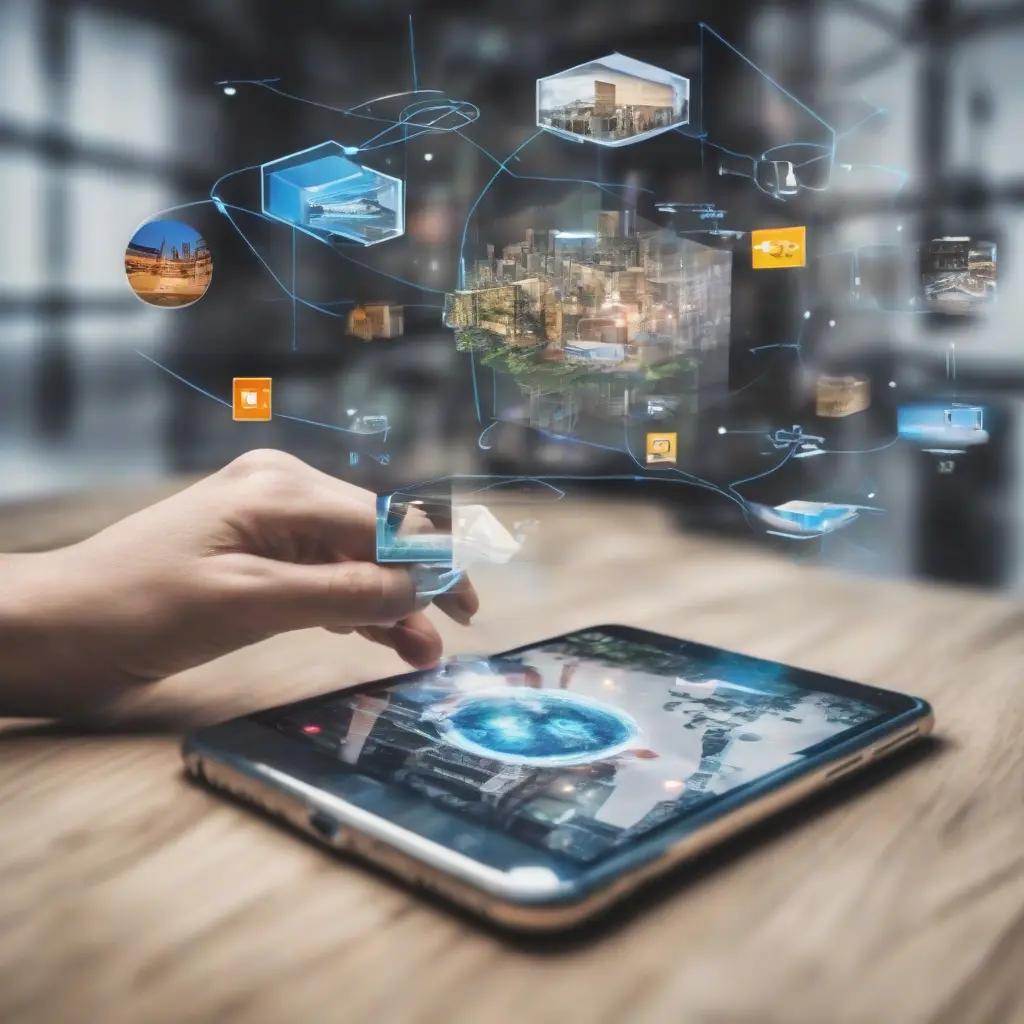
Augmented reality (AR) has gained traction as a cutting-edge technology that overlays digital information onto the real world. By enhancing the user experience and providing interactive elements, AR has found its way into various sectors, including gaming, education, and retail. The integration of virtual components into physical environments allows for incredible engagement and enhanced learning opportunities. This article will delve into the mechanics of AR, its underlying technologies, and the diverse applications that are shaping the future.
What is Augmented Reality?
Augmented reality refers to the technology that superimposes digital content, such as images, sounds, and other sensory enhancements onto the real world. Unlike virtual reality, which creates an entirely artificial environment, AR maintains the user’s view of their surroundings while adding virtual elements. This fusion of reality and digital information results in an enriched experience where users can interact with both the physical and digital worlds seamlessly.
How Augmented Reality Works
The functioning of augmented reality hinges on several key technologies, such as computer vision, simultaneous localization and mapping (SLAM), and depth tracking. These technologies work collaboratively to identify real-world objects and environments, allowing AR applications to understand where to place virtual content. Devices like smartphones, tablets, and AR glasses typically house sensors and cameras that capture the real world, process the information, and display the augmented experience to the user.
Key Technologies Behind Augmented Reality
Computer vision plays a significant role in AR, enabling devices to interpret and analyze visual input from their cameras. SLAM technology allows AR applications to create a map of the environment while tracking the device’s location within that space. Additionally, depth tracking helps in accurately positioning virtual objects relative to real-world surfaces, ensuring a realistic interaction. These technologies collectively contribute to the efficiency and effectiveness of augmented reality systems.
Applications of Augmented Reality in Healthcare
In healthcare, augmented reality enhances training, diagnosis, and patient care. Medical students utilize AR for immersive training, allowing them to visualize complex anatomy and practice procedures in a risk-free environment. Surgeons can employ AR to overlay critical information onto their field of vision, aiding in precise operations. Furthermore, AR applications assist patients in understanding their treatment plans and potential outcomes, promoting informed decision-making.
Augmented Reality in Education
The educational sector is witnessing a transformation through augmented reality, which offers interactive learning experiences. AR can bring textbooks to life, enabling students to visualize concepts in 3D, thus enhancing engagement and retention. Through AR applications, historical events can be recreated in real-time, allowing learners to immerse themselves in history. This technological integration not only makes learning enjoyable but also caters to various learning styles.
AR in Retail and E-commerce
In the retail and e-commerce sectors, augmented reality provides customers with an interactive shopping experience. AR applications allow users to virtually try on clothing, makeup, or accessories from their devices, reducing the barriers to online shopping. Retailers can showcase products in a real-world context, giving consumers a better understanding of size, color, and fit. This technology enhances customer engagement and can lead to increased satisfaction and higher conversion rates.
The Role of Augmented Reality in Tourism
Tourism has also benefited from augmented reality, enhancing the travel experience. Tourists can use AR applications to access information about historical landmarks, museums, or cities, often by simply pointing their devices at the object of interest. These applications may include audio guides, facts, and interactive content that enrich the travelers’ understanding and appreciation of their surroundings. This immersive aspect of AR enhances not just exploration but also enjoyment of the journey.
Challenges Facing Augmented Reality
Despite its potential, augmented reality faces several challenges, including technical limitations and user acceptance. The hardware required for AR experiences can be costly, and the technology may not be accessible to everyone. Additionally, concerns regarding privacy and data security arise when AR applications utilize cameras and personal information. Ensuring seamless integration while addressing these issues is crucial for the widespread adoption of augmented reality.
Future Prospects of Augmented Reality
The future of augmented reality looks promising, with continuous advancements expected in both hardware and software developments. The integration of artificial intelligence will likely enhance AR’s capabilities, enabling more sophisticated interactions and personalized experiences. As the technology becomes more accessible, we can anticipate increased applications in various sectors, strengthening the bond between the digital and physical environments. This evolution holds the potential to reshape how we interact with the world.
Conclusion
In conclusion, augmented reality is revolutionizing how we perceive and interact with the world around us. By layering digital enhancements onto reality, AR is making significant strides across various fields, from healthcare to education and retail. As the technology continues to evolve, its potential applications will expand, providing even more opportunities for innovation and engagement. Embracing augmented reality will likely become integral to enhancing our everyday experiences and interactions.